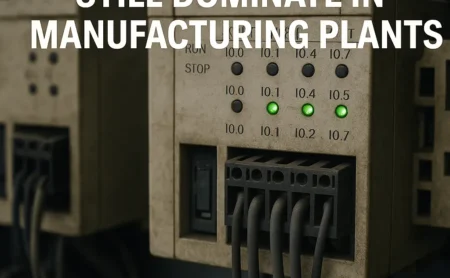
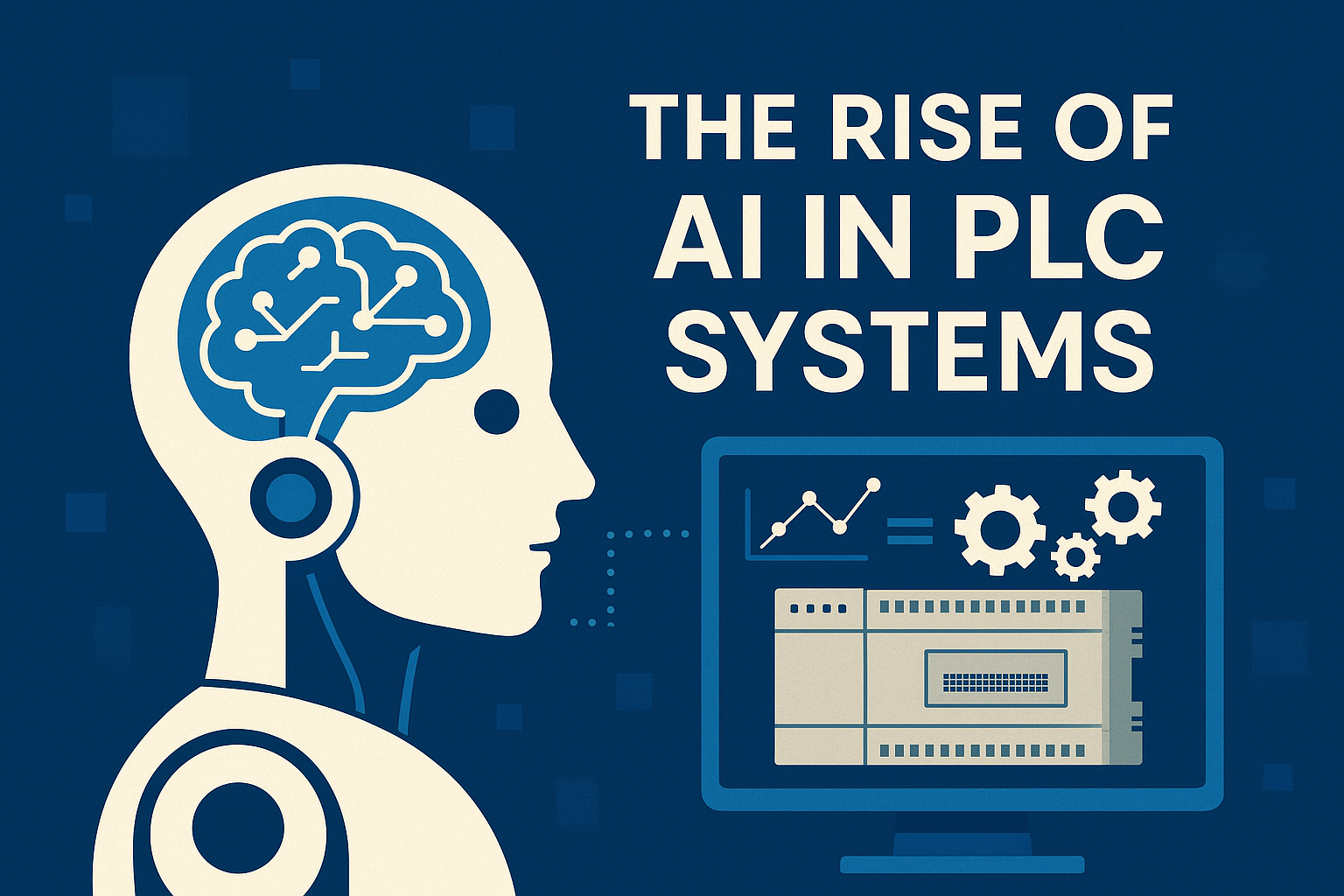
Industrial automation has long relied on PLCs (Programmable Logic Controllers) for precision, reliability, and uptime. But as manufacturing environments become more complex, traditional PLC logic isn’t always enough. Enter Artificial Intelligence (AI) — a game-changer that’s pushing automation beyond fixed rules and reactive controls.
In this post, we explore how AI is transforming PLC systems and what that means for engineers, plant managers, and automation businesses.
1. What’s Changing: Traditional PLC vs AI-Enhanced PLC
- Traditional PLCs: Execute pre-programmed logic, ideal for fixed, repetitive tasks.
- AI-enhanced PLCs: Incorporate learning models to adapt to changes in real time.
- The new role: AI doesn’t replace PLCs—it augments them.
2. Real-World Use Cases of AI in PLC-Controlled Systems
- Predictive Maintenance
AI analyzes historical machine data to predict failures before they happen.
- Process Optimization
AI algorithms fine-tune operations to reduce cycle time and energy use.
- Anomaly Detection
AI flags abnormal patterns even when sensors don’t trigger alarms.
- Autonomous Decision-Making
In some systems, AI is now adjusting control parameters without human input.
3. How AI is Being Integrated into PLC Architectures
- Embedded AI chips in new-generation PLC hardware.
- Edge devices with machine learning capabilities feeding into PLC logic.
- AI-driven SCADA and HMI systems that influence PLC control decisions.
- Cloud-based AI analytics that provide decision support back to the PLC.
4. Brands Leading the AI+PLC Revolution
- Siemens: With their Industrial Edge and MindSphere platforms.
- Rockwell Automation: AI-enhanced control via FactoryTalk.
- Schneider Electric: Using AI in EcoStruxure for condition-based maintenance.
- Beckhoff: Offering integrated AI modules for real-time edge applications.
5. Challenges and Considerations
- Data Availability: AI needs large volumes of clean, labeled data.
- System Complexity: More intelligent systems require more robust cybersecurity.
- Cost vs ROI: Is AI overkill for smaller facilities or legacy equipment?
- Skills Gap: Engineers need to understand AI, not just PLC logic.
6. What’s Next: The Future of AI in Industrial Automation
- Self-optimizing PLCs
- AI co-pilots for plant operators
- Integration with robotics and vision systems
- Industry 5.0: Human-machine collaboration through cognitive automation
AI isn’t just a buzzword anymore—it’s redefining the capabilities of PLCs across industries. As AI-enhanced control becomes more mainstream, the factories of tomorrow will be defined by systems that learn, adapt, and optimise themselves—all with the reliability and precision that PLCs are known for.